Innovation at vanRaam
Every vanRaam bike starts with a question: how do we make this better? That question runs through every department, from the engineers designing the next generation of frames to the teams building and testing every bike by hand. It's why vanRaam is recognised as a leader in Smart Industry, and why the range looks and rides the way it does.
A factory built around quality
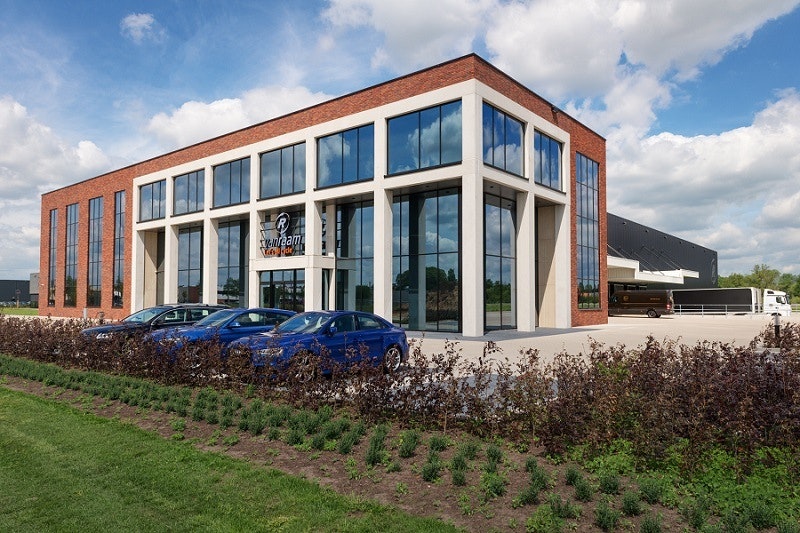
vanRaam has been making specialist bikes since the 1980s. In late 2018 we moved into a purpose-built factory in Varsseveld, the Netherlands, designed from the ground up to support the way we work. Energy efficient by design, the factory uses heat pumps, solar panels, and extensive insulation to be as self-sufficient as possible. It's where every vanRaam bike is still designed, built, and tested today.
Design and research
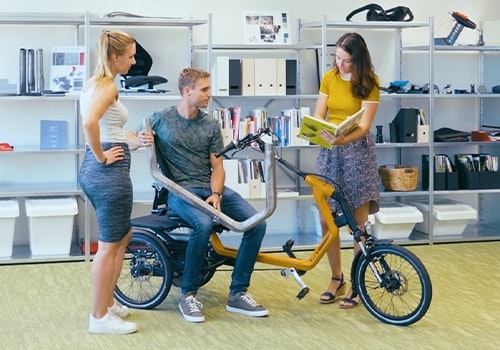
Our Research and Development team is continuously working on the next generation of vanRaam bikes. Using SolidWorks 3D design software, they model, test, and refine every component before a single frame is cut. Alongside product design, the team researches rider needs and emerging cycling technologies to make sure vanRaam stays ahead.
Production: precision at every stage
The production process at vanRaam uses some of the most advanced manufacturing technology available, including a 3D laser machine for pipe processing, CNC turning and milling machines, welding robots, and a fully automated Kardex lift system for order picking. Every wheel is built in-house, with spokes placed, tensioned, and balanced using dedicated machinery.
Bikes are assembled in a structured line production process, divided into clear stages so that multiple bikes can be built simultaneously without any compromise on quality.
3D printing
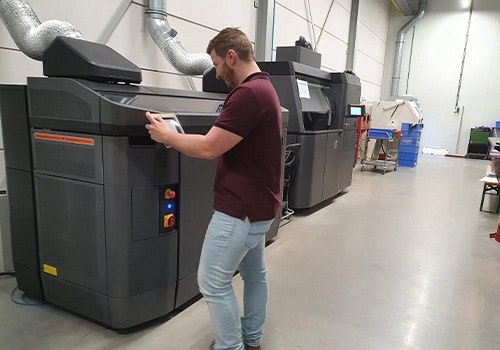
Since 2017, vanRaam has used 3D printing to produce bike components. You'll find a 3D printed part on almost every vanRaam bike, from small covers to chain guard caps. We use HP Multi Jet Fusion printers, FDM printers, and a metal 3D printer for more complex components.
The metal printer is particularly useful for producing shortened and eccentric cranks. 3D printing allows us to achieve the optimal shape with minimal material waste, making it both a quality and sustainability decision.
3D scanning
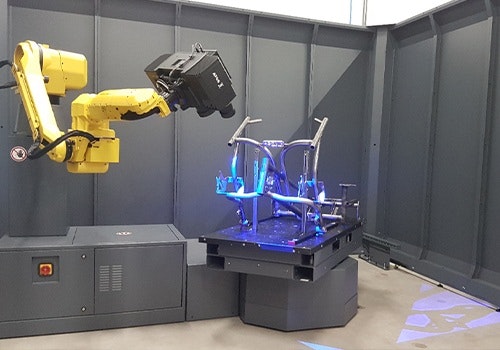
Since 2020, vanRaam has used a GOM ATOS scanbox to digitally capture bikes and individual components. A robot arm scans objects on a turntable, creating a precise 3D model that can be compared against the original design. Any deviations are identified and corrected, ensuring consistent quality across every bike we build.
Powder coating
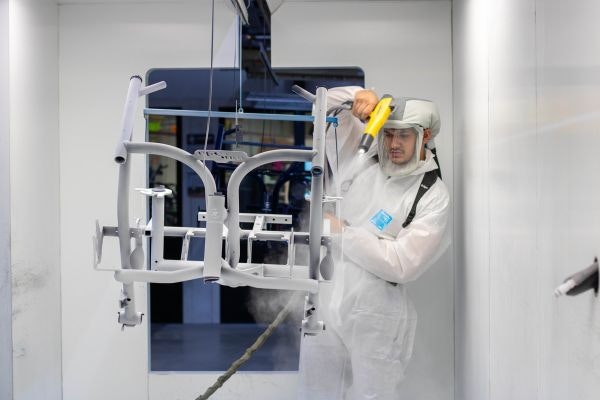
Every vanRaam frame is finished using an electrostatic powder coating process. Powder paint is applied using compressed air, adheres to the grounded frame, and is then cured in an oven. The process is solvent-free, produces less hazardous waste than conventional painting, and allows excess powder to be recovered and reused. It's how vanRaam bikes get their colour, and it's why that colour lasts.
Testing
Before any bike leaves the factory, it goes through a rigorous testing process. Prototypes are tested on dedicated bicycle, wheel, and battery test benches. Our test engineer runs endurance tests to verify performance and durability under real-world conditions.
Riders visiting the vanRaam experience centre in Varsseveld also benefit from a purpose-built test track, designed to replicate the kinds of traffic situations and surfaces riders will encounter on the road. It's useful for customers trying bikes for the first time, and equally valuable for our R&D team gathering real-world feedback.